An Outdoor Blog

Dec
31

Right before I headed to Kunming from Yangshuo, a pleasant late November day, my partners and I visited a crag called Banyan Tree to have some fun on a couple of 5.10’s. Just like going to most of the crags in Yangshuo, we passed some farmland and hiked up a small trail behind farmers’ houses. At first, we had the crag all to ourselves; soon enough, a few kids showed up to have some fun, too, because it was a day off from school. They threw rocks, climbed trees, fought with sticks, like kids everywhere else. I noticed that during their play, they never forgot to monitor Mark’s progress, who was top roping a 5.10b. Before Mark topped out, all the kids but one were summoned by their big brother. One kid didn’t leave even though he lost his playmates. He stood right next to us waiting for something more to happen.

After Mark finished the route, I started leading, one after another. Every time when I looked down to find my foot placement, I noticed that the kid was watching me - not only was he observing, but he was definitely learning. He did not want to miss any of my single movements; he jotted down all the information in his mind. “These kids should have a chance to climb; after all, all these climbs are in their backyard,” I wondered, “I wish I had some proper gear for him.”

That evening, I visited my local friend Ton Ton at her bar Bar98, and I bumped into Bob Keaty, who is the founder and the director of Yangshuo Access Initiative (YAI). Naturally I asked him whether somebody is considering a service project to teach local kids how to climb. Bob responded, “I have been wanting to teach local farmers about climbing. They ask me what climbing is all the time. I plan to persuade Chinese guiding services to engage in the project.” I knew Bob speaks fluent Mandarin, but not until that evening, did I realize “fluent” was an understatement. Bob went to school in Taiwan, married a Taiwanese woman, and has been working in Shanghai for years. The only thing to make Bob not Chinese is his appearance. Interestingly, the combination of a western look and a thorough understanding of Chinese culture won him friendship from many local farmers easily, which makes him a perfect representative of YAI. From him, I learned about many access issues in Yangshuo originating from conflicting interests among guiding services, independent climbers, and local farmers. One of the bigger news he told me was that in May, White Mountain was forced to close up once. (Currently, White Mountain is closed again.)

White Mountain? The previous time I visited White Mountain was last fall. It was a sunny day, and there was no shade to hide in underneath the wide and steep south-facing crag. Before the symptoms of heat exhaustion could show up, local farmers came for our rescue with a bunch of juicy oranges. “You guys must be thirsty,” they said. When we offered them some compensation, they shook their hands swiftly and repeated more than a couple times, “these oranges are for free.” They chatted with us about how busy the crag was a week ago when the first Yangshuo climbing festival took place, and tried to share with us some potential crags which were not yet on the guidebook. Who would have thought just a few months later, White Mountain was closed.

What can I do? I have been pondering on this question ever since I learned more about the access issues in Yangshuo. First thing is of course to express gratitude. Technically, farmers do not own any of the crags; however, to access the crags, we climbers often have to walk through their farms, or inches away from their houses. I always thanked local farmers for letting us walk on their farms and climb in such a close proximity, and they always shied away from my appreciation and responded with “not a big deal,” “not necessary to mention the thank word,” or “you can come here anytime, no problem.” I could feel that they appreciated our appreciation, and then many of them would watch us climb for a while and some of them would ask us questions, such as “How do you get up there? The climbs look so steep.” “Is climbing that fun?” I once offered a farmer a top rope; not surprisingly he turned the offer down even with our persistent encouragement. However, I believe that many farmers would give it a try if there was a more organized event.

Secondly, I can think about their needs and be mindful about our impact. Tourism should bring revenue to locals. Initially farmers did not mind climbers and they even opened their arms to welcome new visitors. Farmers are poor but they are usually nice and hospitable. Yangshuo is getting more popular and more recognized as a world-class climbing destination every single day, as a result, numerous climbers have rolled in and out. Farmers who live close to the crags possibly haven’t felt that they have benefited from the booming visit because climbers often come for the climb and leave right after the climb, and they find their accommodation in town, dine in town, and shop in town. Instead, farmers often have to deal with the drawbacks of fast-growing tourism, such as inconsiderate climbers leave waste and trash behind and walking through farmers’ clean cement yard with their muddy shoes just to cut a quick way out. Bob suggested a few options. He often reserves a rural-style stir-fry dinner from a farmer near the crag he will be climbing and enjoys a hearty dinner after an exhausting day. Buying drinks or snacks from them also helps. The 69-year-old lady who carries drinks up the steps to Moonhill happily told me, “Oh, they got tired and buy drinks from me. Oh, those climbers love beers.” YAI also has proposed assistance to farmers who are interested in providing lodging to climbers.

Other approaches to soothe the tension of access issues require a group effort, such as conducting a service project to clean up the crags, teaching farmers and their kids how to climb etc. I recommend every climber joins Yangshuo Access Initiative. Every little bit helps and good will goes a long way.

Read more articles on climbing in Yangshuo


Dec
17


It is about the middle of my three-month China trip since Nov 12, 2009. This is my third time stepping on Chinese soil, and like the previous two trips, this trip is just as significant. As a climber, climbing steep limestone, surprisingly, is my secondary purpose of this trip. My primary objective is to perform reconnaissance for my adventure travel business, LittlePo Adventures (a working title), and therefore I have been actively investigating aesthetic areas in China for active exploration and ultimate adventure. In the meanwhile, I have been making connections with local businesses and proposing collaboration projects with local residents.

I have been incubating the idea of launching a China adventure travel business since 2004. It was the fourth year of my PhD study at University of Pennsylvania and the second year since I started engaging in outdoor endeavors. Many of my outdoor friends who have strongly related to my passion towards nature and technical skills often asked me what the outdoor environment is like in China and Taiwan. I often was able to amaze them by enumerating geographical facts I acquired from textbooks, literature and historic novels; however, I was not capable to describe any deeper connection and appreciation people usually feel after physical exertion, i.e. hiking, climbing, and paddling etc. I left my friends hanging, longing for adventures and exploration in China’s mountain ranges, scenic rivers, and rich culture. The only difference is that I have been feeling the void for a couple decades and they have perhaps for only a few years. I made up my mind then - someday, I will bring my English-speaking friends to experience China and Chinese speaking friends to awe the natural wonders in the States.

Since then, I have actively accumulated my credentials. I became an active volunteer backpacking leader for the AMC. In order to acquire technical skills in a systematic way to speed up the learning process, I took several NOLS courses on glacier mountaineering and rock climbing. In May 2007, I defended my thesis and secured my PhD degree in computational linguistics and a month later I was in Alaska attempting Denali, the highest peak of North America. Denali climb was, and still is, the most exhausting expedition I had ever endured; I also learned a valuable lesson on Denali: I had to turn around at 19,400 feet because of acute mountain sickness. After I arrived home safely, I realized that while I like computer science, I have to do what I love. It is like when nature calls, you just ought to act upon it. “Like” is not enough to push me far in life; “Love” can and it brings enlightenment along the journey. I practice a near dirtbag lifestyle to climb at various climbing destinations to build up a solid foundation and to familiarize with different type of rocks in order to become a better climber. I work for several outdoor education organizations, including NOLS, and now I dare to call myself a competent outdoor educator and climbing instructor.

Last winter, I spent a month climbing in Yangshuo, one of the most developed rock climbing destinations in China. The experience struck me that it was time to put forth my five-year-old baby into reality. And these three months scouting in China will be my springboard for a well thought-out launch.

Like all small business entrepreneurs, I am always thinking of my niche. What are my strengths? What can I provide? Who are my potential customers/clients? What is my mission? All these questions formed a gigantic spider web and at times I felt anxious and stuck. I went back and forth trying to escape from the phantom threat of this imaginary poisonous spider. Finally, resorting to my original motivation gave me the answer. I wanted to bring my American friends to experience China and that is it. I want to guide a small and intimate group from the States to enjoy what they love to do in the outdoor in foreign terrain. The foreign terrain provides excitement and healthy risk for them to endure and I can enrich the China experience not only because I am a native Chinese speaker but also I am well educated in Chinese literature, history, geography, and philosophy. In addition to my outdoor expertise, my clients who are also my friends can have the safety net in a foreign land.

My plan is to consult with every single client with what they need and what they want to accomplish and work hard towards fulfilling them. My clients will be with me and my local friends from the very first second till the last second and they will not be thrown around between random outsourcing companies. Every trip will be personal and completely customizable.

So far, I plan to present three types of adventures (all the names are working titles):

1. Dirtbag China Climbing Series - suitable for rock climbers who look for maximum time of rock climbing in amazing scenic destinations, are willing to sacrifice some physical comfort in exchange of cost reduction, and are excited to enjoy cheap but delicious street food for most meals.
2. Active China Trekking Series - suitable for hikers or backpackers who appreciate trekking in pristine mountain ranges or hard-to-get-to historical sites to experience way beyond what ordinary tourists can endure.
3. Recon Trip Tag-Along - suitable for anybody who wants to tag along with me on my scouting trip and is okay with only figuring out a few days ahead at a time, and can tolerate the unexpected. The benefit is to explore a totally unknown territory with an experienced traveler and native Chinese speaker.

I am very excited and committed to make it happen. I am also willing to take input and suggestions from any of you to help me refine the plan. Feedback and a different perspective always helps, and that is especially true because the following principle is what I will always apply when conducting my business - “your friend is your guide.”

Stone Forest, Yunnan China

Stone Forest, Yunnan China


Alberto Bolting a new route in Fumin Yunnan China

Alberto Bolting a new route in Fumin Yunnan China


Dec
17

On Nov 12, 2009, I stepped in China again. This time, I came to China with a mission besides rock climbing. I am here to scout climbing and trekking destinations for my Adventure Travel business, which focuses on outdoor adventures in Chinese speaking countries including Taiwan and China. I have traveled through Hong Kong, Yangshuo, Kunming, Fu Min, and now I am in Dali and will head to Lijiang fairly soon. Before I have some time to reflect on my experience and blog about my experience and thoughts, let me share some photos with you first!

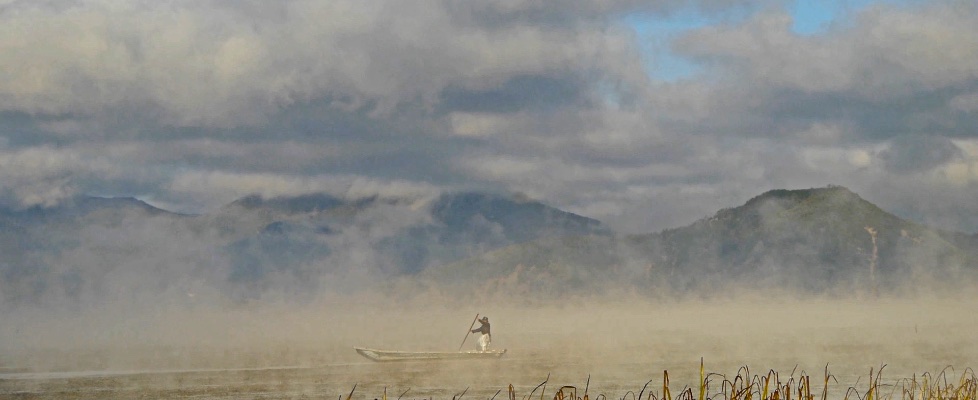
Dien Lake: 6th largest freshwater lake in China

Dien Lake: 6th largest freshwater lake in China


Stone Forest LittlePo's fake bouldering

Stone Forest LittlePo's fake bouldering


LittlePo chatting with climbers from Kunming in Fu Min

LittlePo chatting with climbers from Kunming in Fu Min


Mark Top-Roping at Lower Red Rock in Fumin Yunnan China

Mark Top-Roping at Lower Red Rock in Fumin Yunnan China


Oct
9

Andrea, Jess, and I.  On top of Grand Teton

Andrea, Jess, and I. On top of Grand Teton


On August 29, 2007, I was on top of Grand Teton, guided. On Sep 6, 2009, I was on top of Grand Teton, guiding. Grand Teton was still that Grand Teton, and I was still that girl always wanting to climb mountains. But, something was different. In fact, many things were different.

Two years ago, I had just stepped in the world of traditional climbing. How to climb an alpine rock route was unknown to me but I was eager to learn, to practice, to explore, and to get higher. Nonetheless being a guided client, my mood was relaxed. I took my time and I followed the footsteps. During the climb, the guides half seriously half jokingly commented, “You should quit guide trips,” after I easily followed up the 5.8 Pownall-Gilkey pitch. “I am on my way there,” I responded quietly in mind. I wanted to be a leader, because the leader’s view is different, and because a leader is a leader. I was content to be a follower then though - I paid attention to the surroundings and appreciated the summit view and vowed to come back and climb more rocks in the vincinity. Pleasant, pleasant memory it was.

A few days after that climb, I did my first lead. Since then, I have climbed much and learned much about climbing because I wanted to. I knew in order to get something, I needed to want it, really want it. During my early development of rock climbing skills, I had promised two friends at different occasions to bring them up to Grand Teton. Andrea, a Jackson resident, wanted to climb Grand because it is there. Jess, my co-instructor at a camp for adjudicated youth, somehow had Grand Teton as one of her dreams.

This Labor Day weekend was when we three could all get together and tackle the objective. The weather did not look encouraging - high chance of early thunderstorms for each day we planned to be out there. We went back and forth on Owen-Spaulding route or the Upper Exum route. Due to weather restrictions, we set our mind to do the O-S route because it is easy to bail on this route. Besides, even though Andrea and Jess are active and accomplished outdoor athletes, they are not climbers. It’s much better for non-climbers to start with something less technical.

The approach hike was steep and more tiring than I remembered, perhaps because this time I had to carry camping gear and climbing gear while two years ago I only carried a day pack. Luckily on summit day, it was not as cold as I expected. We could certainly use some heat and sunshine but all we got were occasional showers and sleet. I was very focused on route finding, pulling out topo now and then wanting to find all the features mentioned in the route description. I stopped at places to assist my friends to have a clear and safe passage if I second guessed whether the paths might be either physically or mental challenging. I considered to set up rope and protection, if it would ease up my friends‘ travel. I wanted to make sure they were safe and well. If the weather permitted, I wanted to take them to the top and back to the base camp. That was the only thing I cared about, at least at the moment.

We got to the top; the sun generously gave us a few minutes of congratulation. Friends took a few summit shots and I asked “Ready to go?” Scrambling, two rappels, and more scrambling. I set up everything, gave my friends fire-fighter belays for their rappels, and exhorted them not to kick off loose rocks. Again, I stopped at places where I thought the path became a bit funky and we were back to the base camp uneventfully.

My friends looked tired but happy. I asked them how the climb went, and whether they felt safe during the climb. I got positive responses and I had this feeling that my job was done. Yes, it was kind of like a job. This was not my first time guiding, but the fact that I have played two different roles on the same objective had stimulated much thought. I did not take a 360 view appreciation this time; all I wanted was to get my friends down. Does this job thing make me lose the passion towards climbing? The answer is an absolute “no.” Then what? I was not quite sure. During the dinner we had after we got back to the base camp, I didn’t talk much. The only point I raised was that I was proud that we were the only all-woman team. We saw two other girls during our climb - one climbed with her dad and the other one climbed with three other males. I am also not quite sure why an all-woman team is special but it just is.

We got back in town, and Andrea and Jess both described the climb to their significant others excitedly. They mentioned many moments; new experience, exciting experience, terrified experience and all that. They had much to say, and much to share. I looked at them, listened to them, and realized that they had fun. They got to where they always wanted to go and they had tremendous amount of fun. And something struck me. I have done my job well. Pride crept in and great satisfaction overwhelmingly flooded me. I love climbing. Being able to climb takes me to places I long for. Being able to guide takes people to places they long for. Both make me happy. It is just a question of sooner or later.

Related Article:
The Grand: Record of my Summit-4-Someone Charity Climb

Note: This article is cross-posted at Outdoor Bunnies


Jun
17

I am very excited to announce that on June 1st, 2009, Outdoor Bunnies will declare its existence by launching the Outdoor Bunnies magazine. This magazine is powered by accomplished and passionate female outdoor educators and enthusiasts. It is also the first step for Outdoor Bunnies to fulfill its mission.

I am the founder of Outdoor Bunnies. Founding a community for outdoor women to discover and empower prospective outdoor women has been a goal in my mind for over a year. As a female raised by a generation in which traditional family values are held onto tightly, wandering in the woods or dreaming about exploring the world was discouraged or even prohibited. Not until I stumbled into the States, thousands of miles from home, did I load up a backpack and camp right next to a stream. I experienced great satisfaction. What nature offered me was so simple but indescribable and it is beyond anything materialized society promises to deliver. I knew I wanted to be there and ever since then I kept coming back trying different activities.

However, during those occasions, sometimes I still held back and experienced nerve either because I happened to be a minority in the activities in which I participated or I had an internal debate about how a woman should behave. It was very comforting and helpful for me to witness that other women around me were simply being themselves and enjoying the experience. I believe that many women can relate to my experience and can benefit from a community dedicated to them.

Outdoor Bunnies magazine is the first step. I am grateful to many people for their support, which makes Outdoor Bunnies possible. I especially want to acknowledge all the contributors for their dedication to share and help grow the community despite their busy schedules. Although I am the founder of Outdoor Bunnies, from this moment on the true stewards of the community will be all of the contributors and members. I can not wait to see what Outdoor Bunnies will become.

Szu-ting Yi - Founder of Outdoor Bunnies

What is Outdoor Bunnies?

Outdoor Bunnies is the safe and supportive community for women of the wilderness (outdoor bunnies) to connect and grow with each other. At Outdoor Bunnies, outdoor bunnies share their thoughts, insights, emotions, and wisdom inspired by their outdoor endeavors. Its purpose is to empower fellow bunnies to take initiatives to pursue wilderness adventures, to engage intellectually with nature, or to simply enjoy what the great outdoors has to offer.

What does “Outdoor Bunnies” represent?

Outdoor Bunnies represents the combination of strength and beauty. A common impression people have towards women who engage in outdoor activities is that these women are powerful, hardcore, determined, committing, and strong. Outdoor women do possess all the above qualities. In addition, women of the wilderness are also cute, easy to get along with, down to earth, beautiful, energetic, cleaver, and sexy. The name “Outdoor Bunnies” embraces our uniqueness as women, and our ability to be determined and rise to the occasion when put in a serious environment.

What is the vision of Outdoor Bunnies?

The short term goal of Outdoor Bunnies is to establish and grow the community for outdoor bunnies via the following:

A. Launch Outdoor Bunnies magazine on June 1st, 2009. We will keep recruiting passionate and insightful female outdoor educators and enthusiasts to join the team of contributors. We believe that a magazine contributed to by such a team will help ease the anxiety of prospective outdoor bunnies, as well as strengthen the confidence of current outdoor bunnies.

B. Create a discussion sphere and a social network channel. This will encourage exchanging of ideas exchange and further connection among outdoor bunnies beyond the scope that an online magazine can cover.


May
25

I spent about a month in Yangshuo China and I was very impressed by how fast the number of routes grew while I was there. However, there still seems to be infinite potential at this place. On a rest day, our group decided to take a boat ride drifting down the most scenic section of the Li River. Not only did we appreciate the scenery with awe, but we were all excited by how many untouched limestone towers we counted. Many potential multi-pitch routes; many potential first ascents.

Rock climbing is still pretty young in China, but it grows fast. Just like people expect China to be a powerful economic entity, I expect China to be the ultimate climbing paradise. I studied the geography of China growing up and I know there are many mountains and rocks waiting to be touched. Until now, I have heard numerous stories about great climbing in different regions from my Chinese climbing friends and from western climbing explorers, and the stories keep coming.

I also want to explore China more for personal reasons. I feel a special connection with the geographic features in China because I am very fond of Chinese literature where writers and poets like to praise their land and the wonderful scenery surrounding them. In addition, I consider that land my land because of my Chinese cultural background. Ever since I started to get into outdoor endeavors in the States, I wanted to introduce how great Taiwan and China are for outdoor pursuits to my American friends. How could I not get excited by what I saw in Yangshuo, and that was only the tip of an iceberg.

This article concludes my Yangshuo China series and I have published the following articles on my blog. I have already started to plan my next trip to China and this time I want to spend more time and explore more places. I hope that you look forward to my next series about climbing in China.

Yangshuo China Series:

1. In and Out China
2. Westernized Yangshuo?
3. The Climbing Scene in Yangshuo
4. Yangshuo China Trip Report - Thumb Peak thru Happy New Year (5.10b)
5. Yangshuo China Trip Report - Twin Gate Mountain and its West Tower
6. Yangshuo China Trip Report - Low Mountain
7. Yangshuo China Trip Report - Treasure Cave
8. Yangshuo China Trip Report - Space Buttress
9. Yangshuo China Trip Report - Brave New World
10. Sport Climbing; Traditional Climbing
11. Climbing Potential in China

Photo Credit: Josie McKee


May
25

I had never considered myself a sport climber, simply because I don’t own any quickdraw. My impression about sport climbing was that it was difficult – most of the routes are overhanging and have hard grades. Not for me. The initial reason I started to rock climb was because I wanted to climb mountains and therefore when it was time to climb outside, jumping right into trad climbing was an obvious choice. Trad climbing has been giving me the sense of freedom and authority which I love. I would be content to climb trad routes throughout my climbing career. Why should I bother to invest in quickdraws?

I brought my trad rack for my Asia climbing trip, planning to use it in Taiwan. The climbing area in Taiwan, Long Dong, has more than a hundred trad routes. However, we didn’t stay in Taiwan for long because the weather wasn’t cooperating. I continued to bring my rack to Yangshuo China because on summitpost is says that there are some trad routes over there. Well, I climbed only one trad route in Yangshuo. That route was worth the hassle to bring my rack overseas, but the point here is that I had to become a sport climber in Yangshuo and I now have a brand new understanding about sport climbing.

First, I got yelled at about keeping the right relative location of my foot placement and the rope. When leading, we have to make sure the rope is always in front our body, which means that the rope is always between the rock and the feet; therefore when we fall, our feet won’t trip on the rope and our body won’t turn upside-down (an upside-down fall increases the chance of head injury). If we fall, we want a clean fall. This concept is not exclusive for sport climbing but in general sport climbing starts to offer more gymnastic moves at lower grades, so if you are not on top of this concept when you start sport climbing, chances are you will surprisingly discover that your feet are sandwiched between rock and rope on many occasions.

Second, I got yelled at when I down climbed, but this is quite debatable. In trad climbing, it is widely accepted that down climbing is a useful skill to have. Even though nowadays, the protection gear is very durable, but “leaders do not fall” is still a popular shared philosophy among leaders. Down climbing helps leaders to back off to a good rest spot and the energy level of a leader often dictates whether s/he will fall. In addition, being able to down climb and rest maximizes the chance of on-sighting a route, which many climbers consider as a mark of success and pride. I like on-sighting a route too. I remembered that at the beginning of the Yangshuo trip, on one climb, I down climbed for two-bolt length so that I could rest and contemplate on the hard move, my belayer said “Why are you down climbing? Szu-ting, you are sport climbing, just ‘take.’” I know many sport climbers “take” or fall and then climb back or pull the rope to come back to the falling spot and work on the rest of the climb. They climb routes like working on projects, once they are familiar with all the moves, they would send the route and red-point it. I was not working a project and the route wasn’t overhanging which would make down climbing not trivial. If I could on sight the route, why not?

Third, I entered the “whipper school.” I don’t like to fall. Before climbing in China, I could count the number of sport routes I had done. When I said “I don’t like to fall,” people understood. People tend to trust bolts more than cams and nuts, and since I was and still am a moderate trad leader, most of of routes I lead (grade 5.9 and lower) don’t usually have clean falls. When I climbed in Yangshuo China, the grade starts with 5.9 and unless there was some weird feature in the way, most climbs were steep or overhanging so the fall was clean and safe. “You should not take, just fall!” “It’s time to push your limit.” Pushing limits is a common reason for trad climbers to do sport routes because they can focus mostly on climbing and the fall is usually clean. I still didn’t want to fall but I wanted to overcome it and push myself to experience more harmless fall so I could get used to the feeling. I entered my friend, Josie Mckee’s whipper school. She told me “no take, even if you yell take.” I did fall a couple times during my enrollment, it was not too bad but I am still not comfortable quite yet. However, most definitely I have reconsidered the value of sport climbing as a climber coming from the trad world.

The most interesting difference I found was between my mindsets towards traditional climbing and sport climbing. When I lead trad routes, I assess the route so that I can climb from one rest spot to the next rest spot; when I lead sport routes, I find I pay less attention to the natural features on rock; I connect the bolts to project my climbing path. Sometimes I end up clipping bolts from a not ideal stance. I think it will be most beneficial to replace the sport climbing mindset with traditional climbing mindset. I should ignore the bolts first to practice route finding. When I visualize a climb from the ground, I add the locations of bolts into consideration as if they are where I would set my pros as a predetermined constraint.

To conclude, my take on sport climbing is as follows:

First, sport climbing is indeed a good training method if I want to focus on climbing. It’s more than ninety percent climbing with less than ten percent of protecting and rope handling. Traditional climbing is more of a combination of even distribution of climbing and protecting.

Second, I like to climb so I of course do not want to keep sport climbing off the table. I am a climber and I’d love to proudly declare that I climb everything within my ability. Just like I say I eat everything that is eatable (this proud statement is no longer true since a couple years ago I started to be very intolerant of lactose. What a pity).

Third, projecting seems really fun. Instead of setting my mind on big alpine routes, I can start with smaller, shorter-term goals and really work out my body within a day or hours.

I am a climber; I climb everything within my ability. I love to push my limit so that I have more flexibility to choose routes.

Photo Credit: Josie McKee


May
22

On December 11, 2008, I climbed my favorite route in Yangshuo, The Witch Woman of the Rock, in this fairly young developed area called Brave New World. The Witch Woman of the Rock is a 5-pitch climb; in the guidebook it is described as “a good traditional line of continuous crack climbing, well protected throughout.” The crack was easily spotted from a distance and the line was beautiful. Little did we know we would soon experience the most amazing view ever since we arrived in Yangshuo. Different from many other climbing areas, instead of situating itself within many other limestone towers and formations, Brave New World keeps a distance from them. When we were on top of the second pitch, this panoramic view took our breath away. The view can probably be captured by a wide angle lens but the touching emotion was beyond words.

The Witch Woman of the Rock was the last multi-pitch climb of my China trip. Towards the end of my stay, I was browsing the guidebook to seek for something interesting and this route caught my eyes. A 5.10c trad route. I knew that I was not ready to lead a .10c pitch but I brought my trad rack all the way from the States; I wanted to put them to use. The 5.10c pitch is the last pitch, and we rappel the route to descend. We can always bail or French aid the route (aka pulling gear to propel upwards).

The first pitch was a 20-meter 5.9. I followed it. The last move was quite bold and one bolt was there just to protect the follower. The second pitch was 5.10b pitch; it is not the crux pitch but I was still nervous because it was my first 5.10b trad lead. I stalled at one spot for a while, and I climbed up and climbed back down three times. I was very glad that the small ledge was there for me to replenish my energy. Finally I did an awkward chimney move and after a few scary moves, I was able to regain good footing. The chimney move was awkward because the feature soon got interrupted by a roof. The other option is to climb outside the feature and deal with a bulgy feature on the left side and eventually land the right foot high on a feature sticking out from the right. I chose to use the chimney. Because of the roof I couldn’t fully extend my upper body and therefore I had to duck the whole way while slowly moving my feet up. Well somehow in a chimney, I had a sense of security. My partner chose the outside route apparently, but I was just proud that I led it.

The difficulty of the third pitch was somewhere between 5.9 and 5.10a. I had great fun following it while my leader might have thought otherwise because I could see marginal gear placement dictated by the rock quality and feature. He linked the fourth pitch, which was a mellow 5.6, and left me deal with the final 5.10c pitch.

The start of the last pitch was straight overhanging, and it also blocked the view of the rest of the climb. It looked pretty difficult already and we wished it would be the crux section. We were not sure whether the route went straight up because on the right, there was an inviting ramp for exiting. At any rate, I needed to get up higher to see the rest of the climb in order to figure out the path of the least resistance.

I put two pieces in, and managed to get higher. There were some good handholds, but they were quite polished and they were all open-hand handholds, not the best kind to grab. I hung on my left arm and placed my left foot in a hole, looking for next good gear placement. My right hand felt something and I screamed with excitement “I found a place to thread!” I was still hanging on my left arm, my left foot was still in this hole far to the left and my right foot was hanging in the air to maintain my balance. I pulled out a single length sling and started to thread the bar feature. The sling was soft and the space behind that little bar was tight, and I started to feel tired, I mumbled “come on, thread; come on…” Right before my left arm gave up on me, enough sling was pushed out behind the bar. I soon grabbed the bar with my right hand, finished the threading with my left hand, clipped a carabiner, clipped the rope and of course yelled “take!”

I felt so much more comfortable with that thread in place because I knew that it was a bomber protection piece, probably the best piece throughout the climb so far. Since there was still much difficult overhanging climbing straight ahead, I decided that it was time to get on the ramp and take a good look at the rest of the climb. Getting through the ramp wasn’t a piece of cake either, I pulled on two cams and finally was able to throw in some hand jamming to get on a ledge. I looked and pondered, the route mostly definitely went straight up. What was waiting for us if we could manage to overcome the first overhanging section was another long overhanging and flaring feature - a tiny crack inside a corner was all it could offer to accommodate gear. We didn’t have many small pieces but it was not relevant for us because it looked like what we could have was bad gear placement anyway.

“Let’s bail,” I said. We left a carabiner and a sling behind. I was very happy. We could have bailed right after we reached the top of the fourth pitch, but we didn’t. We gave it a try, we evaluated the situation and we made a conscious decision. Going to the top matters sometimes but the process of going to the top or not matters always. I was happy I bailed because I chose to. The rappelling to the base was cool. The full moon was up before the sunset, and this route made my trip.

Photo Credit: Josie McKee


May
22

The path leading to the base of Space Buttress was tricky to find; it is right next to a farmer’s house. Before reaching the base, you see a mini pigpen first, which makes you doubt yourself twice whether you are indeed trespassing other people’s property.

When we were climbing there, the owner of the house came to chat with us. He humbly stated out his concerns for climbers; it seems that many climbers had walked right in middle of his front yard when they missed the path a couple feet away. He said, “if it’s sunny, I don’t mind but when it’s rainy, people just leave mud everywhere and it takes forever for us to clean.” Although local farmers do not own the cliffs, they are in fact very generous allowing climbers to climb at very close proximity. I suggested him to make a sign and promised him that I would email the author of the guidebook to urge him to put something in the new edition to help maintain a friendly relationship between climbers and locals. Gladly, on the same day, I also bumped into a western route setter who told me that those actions were in fact under progress.

We climbed a few routes; I was very fond of this 25-meter route called Klingon. It has very technical and fun moves at the bottom, followed by powerful elements towards the top. My favorite route was Dark Star, a two-pitch route, 5.10a and 5.10b. The 5.10b pitch is long - 25 meters. The 5.10a pitch is shorter but it is at least 15 meters long. I decided to link the two pitches together, and carried 26 draws on my harness which almost gave me this delusion that I was trad climbing.

The first two/three moves of the 5.10a pitch were easy and then I arrived at this scary spot - the next bolt was kind of far, it was exposed, and the fall didn’t look pretty. I had to step out left and use either lie-backing (which required me to lean all the way to the left) or try to throw some jams in that wide crack in a corner to the right without many good footholds. Anybody who has climbed with me before would know that I almost always choose jamming over lie-backing especially when I am on lead; no exception here. Jamming gives me a sense of security even though sometimes lie-backing is a more efficient choice (later, my two friends both lie-backed the part).

The 5.10b was long and super fun. It started with many exposed but good and interesting stemming moves. None of the moves throughout the climb were difficult but the difficulty of the climb was very consistent. In my opinion, it was the 25 meters worth of consistency that won the route a 5.10b grade. I could do all the moves but I had to “take” towards the end when I had only three more bolts to clip. I wish I could have rested more at the ledge where the first pitch ended. I remembered that I read this line in one book, “when you lead, you rest wherever you can even when you think you don’t need it.” Until now, many of my climbing occasions have reminded me of this line, and I still haven’t taken full advantage of all the resting opportunities. Furthermore, I can always try to improve my endurance, and this route is perfect for that reason: this .10b pitch is so fun and consistent that I am more than happy to do laps on it.

Photo Credit: Ian Farquhar


May
12


Treasure Cave takes climbers some hiking to get into, but it was worth our effort. It is located at the upper part of a limestone formation, and it is more than spacious enough to accommodate several 100-foot routes. Needless to say, as a cave, it provided us an excellent escape from the still blazing sun of early December. The inner-cave scenery was really something - an outline of the cave combined with a mixed view of fields, farm animals, and neighboring karst towers. It was a pity that we got a couple wet routes resulting from the leaking ceiling. Oh, aren’t we just greedy?

We did five routes. A 5.9, called Adventure Race Groupies, sped up our blood flow. It was followed by another wet and therefore somehow scary 5.9 called Where’s My Tyrolean. We set up a top rope using the shared anchor for a powerful unnamed 5.10+ climb, which I couldn’t do as one pass. The fourth climb we led was a 2-star 5.10b called Losing Face. This route is a 5.9 in general with a tricky 5.10b move which potentially would make people lose face. I finally moved through the crux by applying the following sequence: I moved my left foot as high as possible, and used a crappy left crimper with a tiny right side pull to bump myself up to very good hand holds. I was very proud that I figured out the sequence, but what made me even more proud was the lead of the last climb of the day - a 25-meter 5.10a called Sai Yan which was also marked as a 2-star route in the guidebook.

Sai Yan is a weird looking route. It starts with a wide crack and two bolts are located after a ledge. Before the route reaches another ledge, a giant protruding block joins from the left and becomes part of the climb. There are two bolts on this block as well. To clip these four bolts was not too much of a problem for me, although I did complain that the route was so exposed and I had to do super wide stemming to get this far.

The next bolt shows up right before a roof. I saw a crack to the left of my projected upward path, and the bolt was right next to the top of the crack. I thought there must have been some jugs hidden in the crack but my hope was unfulfilled. The crack only offered a long sequence of repetitive side pulling which translated to unsecured hand movement in my mind. I looked down; the consequence of falling was high; god damn the protruding block because it would be my landing grave if I would have fallen. I clipped the fifth bolt and I sighed.

I rested myself marginally at an awkward stance, and I tried to straighten my arms to conserve my ever-losing energy. I moved up and what welcomed me was an awkward looking humongous horn-shaped formation sticking out from the left. I couldn’t see a thing, including the sixth bolt which I knew was somewhere to my right. I tried to move out to the right a little bit more, and I still couldn’t see the bolt, neither did I feel secured, and the consequence of falling remained high. I backed off to my original spot, where I could hold on to something to keep myself in place. I yelled down “Where is the bolt?” Corey yelled back “it was right there” and started to give me more detailed references. I reached out my fingers and I felt the bolt. I clipped the bolt with my fingertip memory. I couldn’t fall and I didn’t fall.

After the success of the blind clipping, I regained the courage to boldly move way out to the right and retrieve the location of good handholds. The upper portion of the climb gradually became mellower but I failed to on-sight it because I was beaten up by the exposure, physically demanding overhanging feature, and the fear of the serious consequence of falling. My two friends didn’t lead it because they “didn’t want to kill themselves” especially after watching me leading it.

I jumped on it because the route has two stars and it’s long (I personally prefer long routes). And of course I thought I could do it. I was scared at some point because I didn’t like the price of falling. But that sense of fear was quite different than some random fear which often occurs to me at some climb especially when I try to move through a crux but the fall is in fact very safe. At the occasion of climbing Sai Yan, I thought “I must not fall,” but on other occasions I think “I do not want to fall.” If I back off when I must not fall, I will not feel bad; If I back off when I do not want to fall, I will feel I did not exert myself fully and therefore feel sorry.

When I chose to proceed with the climb, Sai Yan, at places I felt that I must not fall, once I got into action, I was very focussed on each of my moves and therefore my brain had no more space for fear. Interestingly, many times when I chose to proceed when I felt that I did not want to fall, my moves were still sloppy because the fear was still there. My expectation is that I will always make the right choice either to proceed or bail when I must not fall; and I will learn a way to accommodate my fear when the fall is safe because the experience of being crystal clear on a climbing sequence is priceless.

Photo Credit: Ian Farquhar