About LittlePo Blog

We regularly update our blog to provide news, and informative articles about China and Taiwan on topics related to outdoors, cultures, cuisines, and global issues. Subscribe to our blog via RSS. Take one step further to sign up for our bi-monthly newsletter to get the inside scoop and subscriber-only promotions.

Archives

A New Trip with LittlePo Adventures: Explore the Tibetan Plateau

The Genyen Massif


Greetings!

We at LittlePo Adventures wanted to let you know about an exciting new scouting/adventure trip we are offering in Western China this fall.

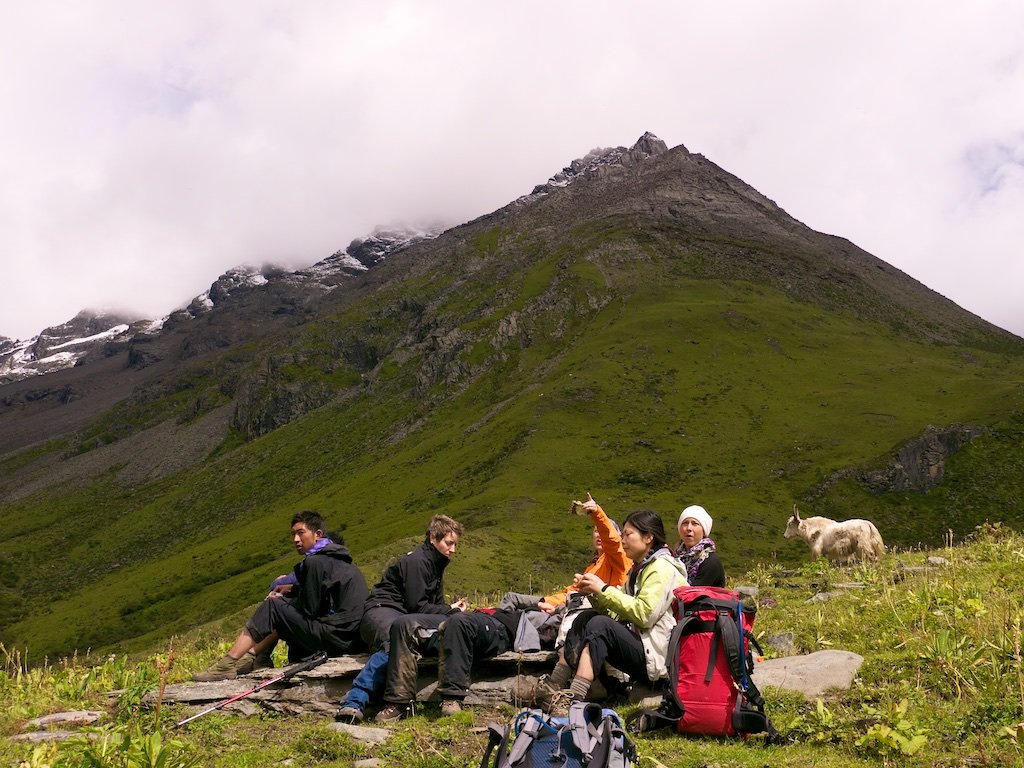
is a trekking and service based expedition into the heart of the Tibetan Plateau to experience the wild scenic beauty of the Himalaya and the vibrant culture of the local people who live there. 

Dates: September 26 – October 8th
Cost: $2,100
 

As you might have heard Szu-ting Yi and I will be visiting the Genyen Massif located in the Tibetan Plateau to attempt to summit several unclimbed peaks. We will also be working on a film about Rinchen Chuta and the school he is trying to build in nearby Litang. We were very fortunate to receive the Lyman Spitzer Alpine Grant from the American Alpine Club and the Planet Granite Grant.

Be sure to follow are progress at:  http://dea-media.com/return-to-genyen/
Here is a short video explaining the project:  

After the climbing expedition concludes, Szu-ting and I will offer Explore the Tibetan Plateau a unique 14 day trekking/cultural immersion/service project trip in Western China.

When, Where and What?
The adventure will start on September 26, 2011* in Chengdu China, the capital of Western Sichuan provinces. We will observe the Giant Pandas living nearby and take in a Sichuan opera before traveling across the Tibetan Plateau to the town of Litang. In Litang we will spend some time helping Rinchen Chuta with his language school. Litang is at the foot of the Genyen Massif and we will then trek into mountains setting up a small base camp in front of the magnificent Lengu Monastery. The next few days will be spent exploring the valley, day hiking amongst the meditation caves that look out on the breathtaking granite spires nearby.  Our journey will conclude by traveling south to Yunnan province visiting the mythical town of Shangri-La and ending up in the ancient and ethnically diverse city of Lijiang on October 8, 2011.
*start and end dates are somewhat flexible

We are excited about sharing this trip with our friends as it encompasses spectacular scenery and amazing cultural diversity. But as a new itinerary, we are calling this a “scouting trip.” What does this mean to you or your friends that might be interested joining us?

What is special about this adventure?
1. Reduced cost – As Szu-ting and I will already be in China our cost will be reduced and we will pass along these savings to you.
2. Small group – 6 max, but 4 is our target number
3. Flexible itinerary – while the overall logistics will be well planned to successfully complete the route, each participant will have input into the daily plan and activity options.
4. Give something back – we will travel with work with local people including helping Rinchen Chuta in his quest to educate the Litang youth. 

For more images from the areas and people we will visit click here:    http://www.facebook.com/media/set/?set=a.228656910504057.49463.109408662428883&type=1

Enjoy this article? Share it:

What are the 10 Essential Items to Pack on a Day Hike?

Josh Beckner packing up in the Piritas Valley, Argentina

What are the 10 most essential items to pack on a day hike? Well, that depends on a number of things. Just like you wouldn’t pack the same items for a picnic to the beach in Fort Lauderdale as you would for a football game in Green Bay, what you bring on a day hike will vary according to your experience, fitness, terrain, length of hike and weather conditions.

I’m lucky if I can remember my phone number, let alone a list of the “ten essentials,” so I developed an acronym that I can use to make sure I have the right stuff for any day hike. While I am not usually a huge fan of acronyms either, some people find them an effective tool for remembering information, so here it goes…

B-E – S-A-F-E

(B) Body temperature regulation and skin protection. Keeping your body at 98.6 degrees F and having enough to eat and drink is key to an enjoyable hike

  • extra layers to keep you warm and dry
  • enough food and water
  • sun protection-hat/lightweight covering layers
  • sunscreen, sunglasses, bug repellent

    Dress appropriately: Nacho Grez, Jamie Selda and Steve Herlihy -Team orange puffy jacket "smoking" some dried papaya in the Avellano Towers, Chile

(E) Emergency plan

  • tell someone where you are going and when you plan to be back
  • a cell phone is useful for emergencies, but do not count on having coverage

    Tell someone where you are going and when you will be back

(S) Sensibility – Probably the most important “essential” to pack for a day hike is something you already have with you – your brain.

  • do your research before you go on your hike
    • know the conditions you will encounter
    • how long it will take
  • re-evaluate and update your plan according to the conditions and your energy level during the day

    Jamie thinking about his next steps

(A) Active Route Finding – Don’t get lost in the first place. Depending on the hike you should have one or more of these items, but remember, unless you know how to use them they are just extra weight

  • map
  • compass
  • GPS
  • good knowledge of the area

    Steve and Jamie contemplating the map

(F) First-aid kit – Many people head into the woods with a 5 lb first aid kit, improvising is the key here.

  • small roll of duct or athletic tape
  • ace bandage
  • mole skin or other blister pads
  • small knife or multi-tool
  • a pair of latex gloves will help keep you protected while giving first aid to your companions
  • education- enroll in a Wilderness First Aid or Wilderness First Responder Course

    Nacho grimacing at Dave Anderson's laceration

(E) Extended Stay – What happens when the best laid plans go array? Carry some extra things to deal with adversity

  • headlamp
  • fire building material
    • waterproof matches, lighter
    • fire starter material-candle or cotton balls soaked in Vaseline
  • extra large garbage bag that can be used to:
    • line the inside of your pack to keep extra cloths and electronics (cell phone, camera) dry
    • emergency rain poncho
    • emergency bivouac sack

A headlamp enables Dave to find his tent at the end of a long day

Enjoy this article? Share it:

6 Questions to Ask Yourself before Buying a Camera

Dave Anderson photographing a Buddhist temple in Mongolia

One of the most common questions I am asked after presenting a slide show is what kind of camera I used to capture the images for the show. By asking this question, people are usually just trying to express their appreciation for my photos, but I have always thought this is an unusual question. If you attended a gallery showing of painter, would you ask the artist what type of brushes he or she used? Probably not, but some people have the notion that if they purchase the right camera their images will be automatically worthy of being published in National Geographic.

Ant Chapin sharing digital images with an old man in Ulan Batar Mongolia

These days, almost any camera you buy can produce high quality images, but a little thought and research before your purchase will allow to find a camera that best matches your needs, shooting style, and budget. Here are six questions to think before purchasing your next camera.

1. Do you want to shoot still images, video or both?

2. Are you a photo geek or a point and shoot person?

3. What are you going to do with all the images/video you have collected from your adventure?

4. What is all the fuss about mega-pixels?

5. What are other important camera features/accessories?

6. What are some excellent models available right now?


1. Do you want to shoot still images, video or both?

It has been said that an image captures a thousand words. Well, if that is true a video must capture at least a million. Luckily with the advances in technology you do not have to choose between video and still camera, as many modern camera will do both. You should however, think about what type of shooting will do the most, stills or video and use that decision to guide your purchases. Many video cameras have the ability to capture still images, but the quality and resolution is often only suitable for the web or small postcard sized prints. Similarly, most point and shoot camera will capture video, but they often cannot record quality sound or zoom in or out while shooting. Recently, many companies have produced Digital SLR with video capabilities that bridges the gaps between the video and still worlds.

2. Are you a photo geek or a point and shoot person?

What type of camera you buy has a lot to do with what type of person your are and how motivated you will be to take pictures on your trip. If you are the type of person who likes the simplicity of a car with automatic transition and has not mastered texting on your cell phone a basic point and shoot camera might be your best option. If you are a person who enjoys reading technical manuals and restores classic cars to their factory specs you will probably enjoy the multitude of shooting options found in a Digital SLR.

The most important factor is choosing a camera you are excited to use. Sounds simple, right? Today’s point and shoots offer the convenience of having a high tech gadget that fits in your pocket which allows you to always have your camera ready for those special photographic moments. Being much smaller than a SLR with a large telephoto lens, the point and shoot is less obtrusive which can make people you are taking pictures less nervous. A point and shoot is also less conspicuous and can reduce the likelihood of your camera becoming a target of theft.

A DSLR Camera (Digital Single Lens Reflex Camera) uses a mechanical mirror and a prism to view and take the pictures. This basic design of the SLR has changed little since it was first invented in England in 1861. Light/images enters the camera through the lens and are reflected up to prism into the optical viewfinder so that you can adjust focus and manipulate the settings of the camera. When you push down on the shutter the mirror is tipped out of the way exposing the film or digital sensor and takes the picture.

Dave Anderson using a hair tie to hold his SLR camera together

As a result most DSLRs are rather larger because they need room for the rotating mirror and prism that direct the light to the viewfinder. An SLR camera enables the photographer to have much more control over the images they are trying to capture. You can adjust the speed, aperture, ISO and host of other adjustments. With an SLR you can purchase interchangeable lens with a wide range of focal lengths that allow you to capture a grizzly bear from a safe distance or a drop of dew on a blade of grass. Recently, several companies have released mirror-less or 4/3 digital cameras with interchangeable lenses and digital viewfinder that produce great images/video and are much more compact.

3. What are you going to do with all the images/video you have collected from your adventure?

When you get back home, what are you going to do with the thousands of images and hours of footage? Your target audience will determine what type of camera you are going to need. The days of passing around a binder of printed images or firing up the slide projector are gone. Today social networks like Flickr, Facebook and YouTube are the most common mediums to share adventures. If you are trying to sell your images for commercial or editorial publication many companies require minimum of 6 mega pixel sized images (which most still camera are capable of taking) and they like to have the RAW image files. When you press the button on your camera and open the lens, the light, shadows and colors are captured and then the processor in your camera arranges and compresses the data into an image. The most common image file format are jpeg’s (Joint Photographic Experts Group). Jpeg files are small compressed files that can be universally opened by any type of computer, but you can’t rearrange the data in the jpeg files to change the exposure or color in an image to any great extent.

RAW files on the other hand are basic image data that is not overly processed. By using photo editing software like Adobe Photoshop you can then manipulate the digital information. You can’t make a bad image great by tweaking the RAW data, but you can make a good image spectacular by adjusting the exposure, color and other data of the file. The down side of using a camera, especially a small point and shoot, to capture raw images is the files are relatively large and it takes awhile for the camera to record them. What that means in practical terms is when shooting in burst rate at a sporting event, for example, the number of frames you can shoot per second is much less than shooting jpegs. Fortunately, all cameras that can record in RAW can record in jpeg as well.

4. What is all the fuss about mega-pixels?

It is very easy to get lost and confused by all the technical information about modern day cameras and some of this misinformation is even perpetuated by the camera industry itself. These days every camera company brags about how many mega pixel their cameras can record. A pixel is a tiny square of color on a computerized display that is so small it appears as a dot. The more pixels or dots that make up the display screen, the clearer the resolution or image will be. A million of these pixels equals one mega pixel. But how many mega pixels do you need to get a good image? David Pogue a writer for the New York Times took identical pictures with a 7, 10 and 16.7. megapixel cameras. He then printed 16-by-24-inch enlargements and set them up on identical easels at a public library and asked people to tell the difference. Only three out of 50 people guessed correctly which print belonged to which camera. A camera with a larger mega pixel will allow you to crop your photos down and still produce quality prints, but you will need to spend more money on larger memory cards and theses larger images will fill up your hard drives on your computer faster. The bottom line is unless you are  going to be making wall sized prints of your images any camera that records images with a resolution of at least 6-8 megapixel will be more than enough. Oh, by the way, the image of the Red Rocks Conservation Area at sunset was taken with my iPhone which has a whopping 3 megapixel camera.

Sunset Red Rocks Conservation Area, NV

5. What are other important camera features/accessories?

Shutter Lag is the delay between when you press the shutter button on your camera and when the image is actually recorded. Cameras with a long delay may cause you to miss photo opportunities. This can be a major problem for fast moving subjects such as animals, sports and children. Cheaper point and shoots often suffer from this problem.

View Finders are often absent on point and shoot cameras and photographers are forced to use the LCD on the back of the camera to compose the image. In bright sunshine it is often very challenging to see the screen. In addition, LCD’s can use a lot of battery power. Some cameras come with an option digital or optical viewfinder which can mitigate both problems.

Image Stabilizers can improve your shots and help out those of us with shaking hands or those zooming in on far away objects. Many cameras tout the fact they have digital stabilizing technology but it is not very effective. A camera with optical stabilization is worth the money.

Video, almost every point and shoot and DSLR will shoot video. The lower end point and shoots will usually capture video at 720 pixels at 30 progressive frames per second (720p30) which is fine for YouTube. Some of the higher end DSLR’s will record video at 1080/60i with full-time AF and manual controls, such high quality video is closing in on the resolution previously only found in professional grade video cameras.

Power, while a few cameras still use AA batteries, most use proprietary rechargeable battery which will last longer than AA batteries, but are much more expensive. Generic versions are often cheaper. Figure out how long you will be away from a power source on your next adventure and buy enough batteries to continue to shoot in between charges or look into car chargers or solar chargers. Make sure you have the right converter/plug for each country you visit as power outlets vary in different countries.

Memory cards, most camera these days use SD (Secure Digital) or SDHC (Secure Digital High Capacity) format cards. SDHC cards are more expensive, offering storage capacities up to 32G. There are different classes of SDHC cards which refer to the speed that they can record the digital information. The higher the class number, the faster the write speed, so if you’re planning on shooting video or using a high-speed burst mode, look for a Class 4 or Class 6 card at the very least. Bring plenty of cards, so you do not have to delete “bad” images in your camera to make room on your card. Reviewing then deleting images in the field requires you to use battery power and you might potentially delete good images by mistake.

Camera bags, should be designed to protect your camera from the elements and accidental knocks and bumps while traveling. In addition, you should choose a a camera bag that will allow you to have quick access to your camera, so that you can capture those fleeting photographic moments. There are almost as many camera bags as cameras, but  a couple camera bags I have used and like are the Crumpler 8 Million Dollar Home for street shooting and the LowePro Slingshot AW 200 for more adventurous shoots

6. What are some excellent models available right now?

Presently there are hundreds of great cameras out there to choose from here are a few good ones

Ultra compact Point and Shoot: Canon S95

Medium sized Point and Shoot: Panasonic Lumix DMC-LX5

Larger Point and Shoot: Nikon Coolpix P7000

Micro 4/3 or Mirror-less Interchangeable Lens Cameras: Panasonic GH2 I shot almost every image on the LittlePo Adventures website with the earlier version (GH1) of this camera and the movie clips as well

DSLR: Canon EOS 5D Mark II


Ok, so you purchased your “dream camera,”  Here are a couple tips on how to capture the moment.

A great approach for new photographers wanting to capture great images an outdoor adventure is to use what my friend Jimmy Chin calls the AK-47 technique. Take lots and lots of images and by sheer volume you are bound to get a few good ones. Jimmy is a professional photographer/videographer as well as a North Face athlete. His expeditions and photography work have him constantly circling the globe capturing breathtaking images of everything from remote unclimbed spires in Africa to ski descents from the summit of Everest. These days he hangs out with celebrities and his work regularly appears in every major outdoor related online and printed media. However, I can still remember working a NOLS course with Jimmy in the late 1990’s and him asking me to explain how shutter speed and aperture worked. Since those earlier days Jimmy has refined his technique, so today he sees the image he wants to record in his mind before it occurs and has the physical ability and the technical skills to capture the image when and wherever it happens.

However, for those just delving into the world of taking pictures the digital age is a blessing. The ability to shoot lots of pictures and then review them in real time is an invaluable aid in the learning process of taking great pictures that was not available to Jimmy and myself when we began shooting using film.

The best way to learn is to take a bunch of pictures and experiment with your camera settings and composition. Instead of holding your camera at eye level directly in front of your subject try different angles, focal lengths, aperture settings and exposure settings. For composing images try using the rule of thirds instead of placing the subject of your picture directly in the middle of the frame. Studies have shown peoples eyes will often first go to one of the green dots in the grid below before they go to the center of the image.

grid showing rule of thirds

Placing the main subject in one of the “thirds” can create a striking composition and a more balanced feel to your image. Take a look at the two images of LittlePo Adventures owner Szu-ting Yi bouldering in Penghu.While the image on the top shows more of her face, by rotating the camera to capture a vertically oriented shot and putting her in the bottom left third of the frame and the unique pool of water at the base of the cliff in the upper right third, the image is not only better balanced but much more interesting.

Technology is constantly evolving and the camera industry changes so fast that by the time you finish reading this blog some of the information might need to be modified. But remember it is the carpenter who builds the house not the tools!

Enjoy this article? Share it:

The Past and the Present of the Chinese Ancient Trade Routes

The sand dunes along the Silk Road

I fancy Western China. One of the reasons I started LittlePo Adventures is that I want to bring as many people as possible to this less traveled region, the earlier the better.

Western China is exotic. Think Himalayas, expansive deserts, diverse ethnic cultures and more. While the wild landscapes might remain constant for generations to come, the local ways of life are changing rapidly due to globalization, tourism, and the interference from Chinese government. If the thought of visiting China ever crosses your mind, do it. Visit Western China where the cultures are the most intriguing, the scenery is the most breathtaking, and the soil was crisscrossed by footsteps of countless iron-spirited caravans traveling or vanishing on the two ancient trade routes – the Tea Horse Trail and the Silk Road.

The Silk Road

I traced the Silk Road back in 1995. Silk Road is famous and has always been a traveler’s highlight in China along with the Great Wall, Giant Pandas, and Three Gorges of the Yangtze. The tour started in Xi’an and ended at the Heaven Lake in Xinjiang.

I was 20 and everything about the trip was mind blowing. Terra-cotta soldiers, squatting road noodle eaters in Shanxi, the steepest stretch of the Great Wall, the layers of Buddhism wall paintings in desert caves. Delicious Lanzhou hand-pulled noodles made me almost swallow my tongue. Holding an arm-length iron stick of lamb kebab wandering in the night market in Urumqi was one of the best nightlife experiences. Crispy and juicy Xinjiang pears, candy-like Hami raisins, and long grained Xinjiang rice mixed with nuts, dried fruit, and most importantly dripping grease from roasted lamb.

The record of the Chinese Silk Road dated back to the Han Dynasty (206 BCE – 220 CE), one of the strongest imperial dynasties in Chinese history. The main branch of the Silk Road starts in Xi’an, which was the capital of twenty ruling entities in Chinese history, via narrow Loess Plateau in Gansu, Gobi desert, and exits Xinjiang towards the Middle East.

Qinghai Plateau. Photo Courtesy: Raven Tsai

Xi’an was a commercial center where many high-end silk products from Southeast China were sent here for trading. Not too far west from Xi’an, the land soon becomes infertile, and local people make a living herding. A neighboring province Qinghai, where the average elevation is above 3000 meters and locals have a similar nomadic lifestyle on its endless alpine meadow, also plays a role in the Silk Road. Qinghai has a significant geological position because it is the source of the two major rivers in China, the Yellow River and the Yangtze. Little do people know, there is also an alternative route of the Silk Road across Qinghai.

The yumminess of the northwest cuisine though pleasant became a faint memory, but I can still feel the awe inspired by the vast landscape fifteen years later. Almost two full days of a train ride followed by a bus ride, I hardly saw anybody. Deserts truly have the ability to swallow people alive. No wonder the ancient stories along the Silk Road are forever legendary and romantic.

In 1995, I was a junior in college, curious about the world, but I was still an ordinary tourist on the Silk Road tour. As I recall, other than some old men wearing a Uyghur hat, holding a cluster of grapes and charging me 1 yuan for a photo, nothing was really that touristy. I was frightened by merchants crowding me when I happened to deviate from the group. The fear was soon replaced by the excitement triggered by the fact that every other Uyghur I met was so eager to take photos with us and made us promise to send the prints back to their villages. Little did I know the tension between Han Chinese and Uyghur had been accumulating which eventually led to devastating Xinjiang riots. Ironically I considered it the funniest joke when a Han book salesperson in Xi’an told me that they were going to liberate Taiwan.

Tea Horse Trail

Horses Haul Goods through the Oriental Alps, Siguniang Mountain Range Sichuan

I have always enjoyed studying Chinese history and geography, so it was surprising that I only got to know the Tea Horse Trail for the first time when I traveled in Yunnan in 2009. After digging in all the books I could find during the trip, I became obsessed with this ancient trade route.

The establishment of the Tea Horse Trail can be traced back to Tang Dynasty (618-907). The Tang era is one of the brightest period of Chinese history. The cultural development reached another climax and the society was very open-minded on female social positions and foreign policies. Princess Wencheng, a niece of the powerful Emperor Taizong of Tang, married the King of Tibet for political and diplomatic reasons. Wencheng was a tea lover and the marriage elevated tea drinking from occasional treats to a national drink of Tibet.

Tea is a necessity to the minority groups living on high plateaus, including Western Yunnan and Tibet, because of the shortage of fresh vegetables and the blandness of water. Each minority group has developed an unique way of tea drinking, such as copper kettle tea of the Sani people, oil-salt tea and thunder tea of the Lisu people, zamba tea of the Tibetan people etc. However, tea trees don’t grow at high altitude, and therefore importing tea from China was the only way to go. The minority groups offered horses in exchange for the tea which were the proudest asset on high plateaus and were in high demand because horses were crucial for transportation and military purposes.

Mountain View along the Tiger Leaping Gorge

Originally there was only one Tea-Horse branch, the Sichuan-Tibet Tea Horse Trail. Between flat Sichuan basin and Gongga (the highest peak of Sichuan, 7556 m), it lies Ya’an where the climate is perfect for tea and hosts the habitat for wild giant pandas. The Sichuan-Tibet Tea Horse trail traverses along Siguniang and Gongga mountain ranges, which are so-called the queen and the king mountain of Sichuan, finishes in the roof of the world at Lhasa Tibet. In modern standard, this trek is absolutely gorgeous and scenic, but back then it was the synonym of hardship.

The tea trading was closely monitored by the government and people bribed corrupt officials to be granted the position of Sichuan salt/tea governor to earn extortionate profit. At one time, the relationship between China and Tibet was tense and Chinese government closed the trail to punish Tibet. This measure accidentally gave birth to the other branch of the Tea Horse Trail – the Yunnan Tibet Tea Horse Trail. Back then, Yunnan area was ruled by a small kingdom and was not part of China.

Dali Old Town

The tea from Southern Yunnan is represented by Pu’er tea. Pu’er is the trading hub centering tea products from areas such as Sipsongpanna and Simao. The travel from southern Yunnan to Tibet was more intense than that from Sichuan to Tibet. The mountains are steeper and there are many scary deep canyons and gorges. In addition to passing high mountains, travelers had to bushwhack through dense rain forests and wade through raging rivers. When the weather conditions were bad, the route also took a detour through Burma.

Most of the Tea Horse Trail is covered by modern roads or dirt paths now, while some of it remains only in history. When I climbed in Fumin, I could see some faint remains along the canyon. Dali and Lijiang in Yunnan were two important hubs along the Yunnan-Tibet Tea Horse Trail. The stories of the “horse gangs,” who were the major forces behind the caravans, are still passed by words of mouth in the region.

Tea Horse Trail versus Silk Road

The Tea Horse Trail and the Silk Road each has a distinct tone. The word I give to the Silk Road is vast – vast desert; vast meadow. I feel that I can see everything when I travel in boundless landscape, ironically, this type of landscape is also the perfect way to hide everything. When I was younger, I often went to the east coast of Taiwan to gaze at the Pacific when I was depressed. The endlessness of the ocean always soothed my mind but I knew that ocean while seem peaceful can be the most dangerous place.

Yaks are commonly seen in Western China

It is difficult to use one word to describe the Tea Horse Trail, perhaps I will use mysterious. It seems that every time I go back to the area or study the area, I discover more fascinating stories. As climbing has become a major part of my life, it’s hopeless to try to resist the calling from the mountainous terrain of the Tea Horse Trail.

I wonder why the Tea Horse is not as well known as the Silk Road. Objectively speaking, the Silk Road has a longer history, has a larger scale, and way more internationally connected. Subjectively I think the Silk Road is more talked about because it is romantic. Vastness and boundlessness provoke wild imagination. Besides, the merchants traded via the Silk Road were high-end, while tea and horses were necessities. People usually brag about purchasing fancy luxurious items. Who would report on their daily errands shopping for groceries or toilet paper?

There are many books available about the Silk Road on the market. It is harder to locate English books on the Tea Horse Trail. The Tea Horse Trail wikipedia page provides some references. Ancient Tea-Horse Trails published by China Travel & Tourism Press is written in both English and Chinese and is an awesome coffee table read. A recent find was The Tea Horse Road: China’s Ancient Trade Route to Tibet.

Xinjiang-style lamb kebab is a popular snack nationwide

Present

The living conditions along the two ancient trade routes were not particularly easy. Locals were willing to endure difficult long journeys because trading merchants brought better income even though it entailed high risks. Nowadays neither the Tea Horse Trail nor the Silk Road provide this type of work opportunities, and locals have to find other ways to make a living. Things are changing rapidly here.

Migrant workers

Stupa maintained by the Chinese government in the Siguinang

Many young people become migrant workers and leave their children with their grandparents. These migrant workers send money back to the villages to support the families; however, the job of a migrant worker is not always stable, which causes their kids to drop out from the school. I detailed this phenomenon in the article “Village Kids in Western China Deserve Better – West China Story,” and LittlePo has made a commitment to support the philanthropy project by direct donation and providing service expeditions to interested small groups.

Globalization

The traditional ways of life are transforming or disappearing one way or the other because of technology advance and globalization. It is not fair to ask the minority groups to keep living the old-fashioned way, especially when that means poverty and hardship. Nevertheless, it’s very interesting to observe the transitions.

During our Trekking the Oriental Alps 2010, our two horse packers always checked their text messages on cell phones when they stopped ahead to wait for the group. Learning from our conversations, I managed to draw the map of cell coverage of the Siguniang mountain range. One of them played pop songs stored in his phone all the time. When I asked, “don’t you worry your battery is going to run out?” Another horse packer replied, “don’t worry about him, sister Yi, his cell phone is powered by solar.”

Satellite dish outside a ger in Central Mongolia

Dave, our associate director, showed me an interesting photo he took along his Long Walk expedition – the photo shows a portable satellite disk on the wild grassland in Mongolia right next to a yurt. No matter where they move their residence to, they can always watch TV.

For me, it’s a good sign that these technology gadgets look out of the place, and I like what my friend, James Kullander, said in an email, “even though there was a television turned on to some old American re-runs, the people watching it were sitting there over dinner eating lamb brains and discussing the year’s mellon harvest, just like they always have.”

Tourism

Trade is becoming an ancient concept for these two ancient trade routes. Nowadays these two routes are transforming into tourism hot places. Just like all other destinations which have transformed from a logging/mining/whatever town into a tourist destination, there are many side effects of tourism happening along the Tea Horse Trail and the Silk Road. However, I am very optimistic about the future development and confident that the beauty of the Western China will remain intact.

Lijiang Old Town

The most obvious side effect of tourism development is authentic minority singing and dancing performance became skin-deep and lost it’s soul. One day I was catching up with some emails in the open yard of a hostel in Lijiang. A group of people dressed in Naxi outfits hustled in and the leader yelled, “hurry, the next tour group will be here in a few minutes.” It is described in the book, China Road, A Journey into the Future of a Rising Power, that the stereotype of minority groups – they are always singing and dancing happily – is widespread by Chinese National TV. All the Han Chinese tourists want to see that. High demand has generated massive supply.

Tourism also gives mixed reputation to popular hubs. For example, Lijiang, a hub of the Tea Horse Trail is a famous old city. The ancient architecture and the cobblestone walkways in the Lijiang old town are definitely worth checking out. However, Lijiang old town is also like a big shopping mall. Outsiders took advantage of the business opportunities of Lijiang and bought properties for building hostels and selling yak jerky and other souvenirs. Most of the original Lijiang old town residents now live in the Lijiang new city. However, aside from the unauthentic business residents, Lijiang is beautiful. You can see the sacred Jade Dragon Snow Mountain anywhere in the city. The mountain to Lijiang is like Rainier to Seattle. Lijiang is also a central hub to get access to amazing outdoor paradise, including Tiger Leaping Gorge and Laojunshan National Park in Liming.

Both Lijiang and Lhasa have a reputation of being a “hook-up city.” Many Chinese tourists come to these two exotic places to look for casual relationships. Many travelers complained on travel forums that some Tibetans in Lhasa have learned ways to rip people off. Even monks would try to sell ancient artifacts which in fact were made in China. Fortunately once you step out of the city limits, the breathtaking scenery is totally worth the hassle and the local residents living in the village are the most simple and hospitable people I have ever met.

Another change tourism can bring echoes the influence of globalization. The article, Important Occasions that Hold Together Jia Rong Tibetans in Siguniang Mountain, describes how a Jia Rong family started a SUV fleet when the tourism picked up.

Interference from the Chinese Government

Red Rock Cliffs in Laojunshan National Park

After many times of traveling and leading trips in China, I often wonder whether Chinese government is promoting or destroying tourism. I praise the tourism development in many historic sites in Guilin. I have learned many new stories and gained much knowledge following the comprehensive mini guided tours sponsored by the government. However in many outdoor recreational destinations, I feel that the government just wants to charge money without giving positive contribution. For example, there are three layers of fee a backcountry traveler has to pay trekking and camping in Siguniang mountain range. My horse packer friend Mr. Huang is actively looking for new venue because his regular job, yak herding, is going to be banned soon by the government because “yaks consume too much grass and hurt the appearance of the national park.”

Chinese government’s plan to develop the West also worsens the relationship between Han Chinese and the local minority people as if the gap was not wide enough. Tibet’s issue is known by the western world. In Xinjiang there is a similar issue. My recent read, Peter Hessler’s Oracle Bones: A Journey between China’s Past and Present, described an interesting story following the author’s Uyghur friend, who was a black market trader in Beijing and eventually leaped to the States and obtained asylum right before the 911. Dragon Fighter: One Woman’s Epic Stuggle for Peace with China describes a story of a Uyghur human right fighter Rebiya Kadeer.

A naxi woman with her tie-dyed clothing

Interestingly, many Chinese people I talked to generally believe that Han Chinese have given Xinjiang and Tibet the best. They also believe the Tibetans and the Uyghur people are heartless and do not know how to properly express the gratitude. To quote one Chinese radio host I met in Dali, “in fact, Chairman Mao liberated Tibet.” Minority groups certainly are not on the same page as the Chinese government. One time when I dined in a Lanzhou pulled noodle chain owned by a muslim family in Yangshuo, a couple customers complained about the food and refused to pay. The noodle chef was irritated by the rude attitude of the customers, and screamed, “we traveled this far from Qinghai here trying to make a living, but you Han Chinese people are still oppressing us.”

Another phenomenon along with China’s political climate change is the revival of religions. Religions were banned during the Mao era. Once Chinese changed gear to develop economy, the rapid change draw out the quest of spiritual guidance from regular people. I visited this gorgeous town called Bai Sha in Yunnan. When I walked along the streets I was soon attracted by colorful handmade tie-dyed and wax-dyed cloth. I bargained with a Naxi woman and asked her whether I could make the final decision after I returned from my hike. She told me that she needed to “go to a church” at 4 pm and wanted me to come back before then because she did not want to miss it. I was intrigued because I thought Naxi has their own customs. It seemed that Christian seeds planted by missionaries starting from a few hundred years ago start to recover and prosper.

LittlePo Adventures and China’s West

Another view from the Tiger Leaping Gorge trail

I guess I don’t have to convince you that I fancy Western China. The more I visit the place, the more I am drawn in. The more I study the region, the more I want to study. The stories that happened and are happening in Western China are just endless much like the landscape. I wholeheartedly want to share my passion towards the region with you, and we at LittlePo Adventures are more than happy to design customized trips for small groups. Embarking on Trekking the Oriental Alps and Discovering the Lost Horizon is also a good way to start exploring the Tea Horse Trail as well. We are also thinking of going back to the Genyen massif and design a trekking tour in that region.

LittlePo’s friend Ed at Red Rock Trek also published a series of trip reports on Retracing Rock’s 1923 Expedition Across the Three Parallel Rivers. Joseph Rock (1884 – 1962) was a legendary explorer and botanist whose footsteps were all over the Yunnan province for his extensive study on the diverse flora of Yunnan.

Enjoy this article? Share it:

Partnership with Karen Fletcher, the Innovator of Qi Dancing

Karen Fletcher

I am excited to announce that LittlePo Adventures is partnering up with Karen Fletcher to provide an integrated experience of inner energy and the wilderness!

I first met Karen in spring 2009 in Seattle where we both attended a workshop ran by Landmark Education. During the event, we had several brief interactions. Karen radiated many strong qualities of a holistic person. Both of us have been busy on personal pursuits since, but our life paths have crossed many times, thanks to a shared passion towards Chinese philosophy and the wilderness.

Karen has an inquisitive mind and expresses herself in an artistic way. She started her journey in Chinese healing arts in 1995 and has practiced tai chi (太極) and qigong (氣功) since. She is also the innovator of Qi Dancing (Qi means “energy” in Chinese) and leads regular sessions of ecstatic QiDance in Seattle area. Recently she has started to explore a closer integration between Qi and the wilderness, which naturally leads to the partnership between her and LittlePo Adventures.

Drawing on the connection between nature and qigong, this partnership will inspire and cultivate people’s connection with their natural strength and exuberance that is ever present in our wilderness. The means will be day hikes, backpacks, and natural wonders integrated with qigong and movement/terrain exploration, play and training. We look forward to being part of a strong community in which people share enthusiasm towards nature and greater connection with their inner well of vitality.

Karen was interviewed on Voices of Women, a program of Dr. Pat’s Radio Show. Listen to her interview on Qigong and Exuberance. She will be presenting this practice/way of life at the Women of Wisdom Conference on Saturday Feb 19th 2011 at 5 pm. Here is the Saturday schedule of the WOW Conference. A description of Karen’s program is as follows:

Step into your Joy and Vitality! This is a unique practice combining the fundamental and powerful practices of Qigong with stone-toning and staffs. Trees, rivers, mountains, wildlife, and Nature are naturally Exuberant. Their strength interwoven with all life and grounded in our Earth’s massive Qi. And Qi – our vital energy – is in some languages also translated as JOY! Remember, Recover, and Restore your natural strength and vitality! Come Ground and Grin and be prepared to laugh and smile! This is a ‘new’ yet ancient, original, most natural and ‘organic’ practice grounded in our own “EARTH GYM” – and our Earth Gym is everywhere!

Read Karen’s bio to learn more about Karen and her amazing work.

Enjoy this article? Share it:

Tibet Memories

Rhys Emmanuel Living and doing development work as a medical professional in Asia has given Rhys Emmanuel unique insight into many areas of life and work and a broader perspective on various subject matters. Hiking in remote highland areas, seeing patients, assisting his wife with homeschooling, cooking and eating a variety of interesting Asian cuisine and interacting with many different Asian people groups have enriched his life and given him many privileged opportunities. Rhys has developed a passion for writing as he has recounted many of his experiences to interested people. At the same time Rhys has developed an interest in photography and is currently pursuing publication for a photography book of Asian people, wildlife and landscapes.

When I first went to Shangri-La in the north west of Yunnan province I met a Tibetan girl named Senga. Senga had never been to school a single day in her entire life. I’d never met someone who’d never been to school even one day. I had met uneducated people before, but in the lucky country of Australia, even indigenous people have been to school at least one day.

Senga didn’t go to school, not because she didn’t want to; on the contrary, she felt a deep disappointment that she had not been able to. She knew she had missed out on something truly valuable in life. She was a nomadic Tibetan girl, which means she grew up living in a tent a long way from even a basic school. Tibetan nomads live in tents made from the black wool that comes from the yak’s annually shed fiber. When Senga grew up, her life consisted of herding yaks to the nearby grasslands that plateaued out at 4500 meters (14760 feet) above sea level, not in the official border of Tibet, but part of the many Tibetan areas outside the official borders. The yaks would eat grass while Senga gathered the yak dung for fire fuel. While the marmots would scurry into their burrows, Senga would come along with a big basket on her back and scoop up the yak dung and take it back to the tent to dry it in the sun. This was the daily routine, but each year in the summer time, the horse racing festival would come around and everything was so exciting catching up with old friends and making new ones. After the horse racing festival, it would be back to herding yaks. When she wasn’t herding the yaks, she would help her mother prepare a simple and typical Tibetan meal. She loved to sing Tibetan folk songs at the top of her voice while making the un-yeasted Tibetan flat bread, and churning yak butter tea for her father, her uncle and her seven brothers and sisters.

Nomad children. Photo Courtesy: Rhys Emmanuel

Her father and uncle were both married to her mother. This was relatively common in this part of Tibet. No one really knew if the man she called her father was her biological father or not, but because he was the oldest of the two men, he was given the title of father, while his younger brother was always called uncle. Her uncle Tashi started coughing when she was about 10 years old and it never stopped. He became more and more thin in his body and eventually he started coughing up blood. The family took him to see the local monks at the Tibetan Buddhist monastery and they said many prayers on his behalf. They then took him to see the local medicine man who prescribed some Tibetan medicine that had been collected in the surrounding mountains. He didn’t get any better and after years of wasting away, he eventually died. Senga told me they took his body to a site where they performed a sky burial. This meant they put his lifeless body on the hillside, made insertions in the flesh and let the vultures eat his flesh and organs. Afterward, they smashed the bones and mixed them with food to feed the vultures until nothing was left. She recounted the story to me stating it was a very dark period for their family.

Senga made me my first cup of yak butter tea and I thought it was the most disgusting drink I had ever tasted. It would be better described as salty butter soup because that’s really more what it’s like. It is served hot in a bowl and one sign of Tibetan hospitality is that they will never allow your bowl to empty; it will constantly be refilled. This means that if you don’t like drinking it you will never be able to finish, but because you can never finish anyway, it doesn’t matter all that much. You just need to put the bowl to your lips several times to look like your making an attempt. After living in this part of the world for nine years, I have acquired the taste for yak butter tea, although I still find it difficult to drink when it is made with rancid yak butter (not so uncommon).

Sporting tricks at the horse racing festival. Photo Courtesy: Rhys Emmanuel

I helped Senga study some English. She was very diligent and determined, but after quite some time she only attained an intermediate level because she didn’t have the foundations of learning that we take for granted getting a primary school education. When she was about 23 years old, her family arranged a marriage for her. She had never met her husband before; he was also a nomad, living in tents and moving with the seasons. She returned to the nomad lifestyle on the grasslands far away where it seems as if time has stood still.

I wish there was a happier ending. I wish I could say Senga had a chance to study and speak English well and get a job. She will probably live in a tent for the rest of her life eating a poor diet lacking in basic vitamins and minerals. She will not have access to decent medical services, not to any medical services at all. Her children will also grow up not having the joy of going to school. Like many Tibetans she will probably live to the average life spanned age of 45 years old and die of tuberculosis or liver cancer. I wish I could say Senga’s life will not be like that, but just with so many other Tibetan people like her, this is what her life will be like.

I remember when I was a kid and Mum would always tell me how lucky I was to go to school. It seems I have heard this my whole life, but until I met Senga, I didn’t really understand it. Senga can’t read or write, she can’t add basic sums and she certainly can’t use the Internet. It seems considering myself lucky is just not enough; I knew when I met her that I had to do something to help those people. We built a school in a remote part of Tibet, which will help over 100 students to get to at least the fifth grade. Besides this we have also given student sponsorships to many Tibetans from remote communities facing financial hardship. It’s not much, but it’s a start. How will it finish? I’m not sure, but each person helped is one less person that will not feel that deep disappointment that Senga feels when she thinks about what her life could have been like.

This is a guest blog written by Rhys Emmanuel. If you would like to write a guest blog for LittlePo, please contact us.

Enjoy this article? Share it:

Zhou’s Wonton in Yangshuo China

wontons: simple and comforting. Photo by Ian Farquhar

Yangshuo is a small town located in southern China. It attracts thousands of tourists every year, who enjoy floating down the clear and winding Li River, appreciating the fabulous karst landscape. In recent years, because of its unlimited rock climbing potential, numerous climbers like myself have poured into this town to test their skills.

It didn’t take me long to find out that the featured food items here were rice noodles and beer fish because every restaurant was selling them. The featured items became ordinary after a week straight of consumption. I had to take a break and that was when I discovered my favorite restaurant in town – Zhou’s Wonton.

It is easy to order in Zhou’s Wonton as there is only one decision to make: small, medium, or large bowl. In less than five minutes, the wontons are ready. Wontons are similar to dumplings, but their skins are much thinner, so they float in hot soup like fluffy clouds and you could easily see the content inside. Wontons are also smaller; their filling simpler and usually finely minced. In Zhou’s Wonton, when I put one in my mouth and used my tongue to gently stir or press, the whole wonton would melt and the aroma spread. With a medium-sized bowl, I could repeat the irreplaceable experience 13 times, and it cost less than 1 US dollar?!

Watching Mrs. Zhou making wontons was another enjoyment. She held a small spatula looking like a medical tongue depressor on one hand, a set of wonton skins on the palm of the other hand. Right after she spread an appropriate amount of filling on one skin, her fingers danced, and a wonton dropped on the table. I did not dare to blink. For one blink, I could miss at least 3 wontons.

I soon became a friend of Mrs. Zhou because of my frequent visits and occasional help on translation between her and western customers. I therefore had the privilege to sit in the front row looking at her making wontons. This is one of the main reasons I love traveling – nothing can be more touching and fulfilling than the moment when I discover the extraordinary among the ordinary.

Enjoy this article? Share it:

A new book Expedition Planning

Expedition Planning

Associated Director of LittlePo Adventures, Dave Anderson, has just published a new book titled Expedition Planning. Expedition Planning is written for hikers, backpackers and other people who love the outdoors and want to plan their own extended expedition in the backcountry. The book provides detailed information about how to plan and successfully carry your dream trip and also contains fascinating narratives from Dave Anderson’s and Molly Absolon’s personal expeditions. Expedition Planning can be pre-ordered now on Amazon and will be available March 1, 2011

The following is an excerpt from the book about an expedition to a remote region of Pakistan.

Summit of Tahir Tower- photo by Brady Robinson

The summit was the size of two pool tables pushed together and nearly as flat. I untied from the rope and let the unobstructed 360-degree view of the Karakoram Mountains sink in. Above me somber clouds began to weep a fine mist, reviving dormant clumps of lichen clinging to the rocks at my feet. Responding to the moisture, the lichen started painting the brown granite with vibrant strokes of neon yellow and pumpkin orange. Below in the valley, the straight borders of green potato fields, outside the tiny village of Khorkondas, were the only hint that humans inhabited the chaotic glaciated land. The rain intensified, softening the jagged skyline and obscuring other high mountain treasures behind a thin veil of moisture.

For the last six months, my expedition team and I had poured our energy into this expedition. Now we were standing together on the summit of Tahir Tower, a previously unclimbed 3,000-foot granite spire.

The impetus for this expedition came from a 2 x 3 inch photo in a Pakistan travel guide. The photo showed what appeared to be large granite cliffs somewhere in northeastern Pakistan. My team and I figured out where the photo was taken, applied for and received the necessary permits to access the area, raised the funds to make the trip happen, packed the right stuff, and all along kept our fingers crossed that the photo was not lying and there actually was something there to climb.

Our small expedition team was composed of Jimmy Chin, Brady Robinson, Steph Davis, and me. Jimmy, Brady, and I work as field instructors for NOLS. Steph is a talented sponsored climber and writer. Though all the members of our small team had been on climbing trips out of the country, the complexity of this expedition was clearly going to be a big step for all of us.

As our planning began, we learned the photo was from the Kondus Valley in the Baltistan region of Pakistan. Unfortunately we also learned the Kondus was in a restricted military zone and had been closed to Westerners for the last 25 years. Despite this setback, the lure of unclimbed mountains persuaded us to try gaining access to the area, and we began filling out the necessary forms to enter the Kondus Valley. Six months later we were elated to learn that we had been granted a climbing permit by the Pakistani ministry of tourism. And though our enthusiasm was somewhat dulled by the reality that the Pakistani military, which ultimately controls the region, might not put much stock in our small piece of paper once we left the capital of Islamabad, we had a start.

Stef and Jimmy sorting gear

The next few months were a blur of applying for climbing grants, pursuing sponsorship, and collecting the right equipment. Before we left we had managed to pool together $15,000 and hoped it would be enough for our two-month expedition. With no real information about what types of terrain or weather conditions the approach and the climbing would include, we packed for every possibility— T-shirts to down jackets, rock shoes to ice axes, and everything in between. Our duffels multiplied like rabbits, and the only people who seemed happy with the huge amount of luggage were the airlines employees, who gladly charged us $1,500 in extra baggage fees. Nevertheless, a year’s worth of planning was behind us at last, and we, along with our baggage, finally arrived in the much-anticipated city of Islamabad.

Once in Pakistan, we drove up to the small mountain town of Skardu, the jumping-off point for every expedition that seeks to explore the crown jewels of the Karakoram Range. In Skardu, we made arrangements to meet with General Tahir, the commander in charge of all the northern areas of Pakistan and on whose approval the success of our expedition hinged. The general greeted us in the well-maintained garden courtyard of the military compound in Kapalu. Standing over six feet tall and carrying his 250 pounds on a broad frame, he projected an aura of strength and respect. We were led to a large sitting room decorated with finely upholstered furniture.

“So you are here to climb my mountains,” he stated firmly, looking at each of us. Just as the pause began to turn into an awkward silence, the smile lines around his eyes crinkled into life, and he continued, “Good. I love the mountains, and there is much to explore in Pakistan.”

As it turns out, as a young man the general had worked as a liaison officer for many foreign mountaineering expeditions. For the next hour he entertained us with nostalgic tales of the mountains and climbers he knew.

“But enough about the past,” he said, pushing aside a plateful of hors d’oeuvres and unrolling a map across the large glass table. Balancing teacups on our knees, we stared down at the map. Not only was General Tahir enthusiastic about us climbing in the Kondus Valley, a place he had visited many times, but he went so far as to point out a spire at the mouth of the canyon that we might be interested in. Watching the general trace his finger across a map marked “Military Map—Top Secret” as he talked, my climbing partners and I were wide-eyed with the wonder and excitement of becoming privy to information that we knew we did not have the clearance to see.

General Tahir continued, confirming that our permit from the ministry of tourism meant nothing there. In these remote mountains, the military, and ultimately Tahir, was in control. With a sweep of his hand over the map, he invited us to explore whatever we liked. The only stipulation was to send him some pictures of whatever we ended up climbing and to tell all our friends back in the States about the friendly people and great mountains of Pakistan.

Exuberant, but somewhat stunned by our good fortune, we piled our gear into hired jeeps, tied bandanas around our mouths and noses, and began the slow, dusty drive toward the unknown.

Tahir Tower

As we passed through one local police checkpoint after another on our journey to the “forbidden” valley, we found that the mention of General Tahir’s blessing to enter the Kondus unlocked door after door and would-be roadblocks melted into the dust behind us. We continued on, higher and farther until we turned one tight corner and the mystery of the Forbidden Kondus evaporated. There before us, and only 300 feet from the road, was the giant tower the general had described.

Closer inspection of the tower through our spotting scope revealed a continuous crack system that ran over 3,000 feet from the base all the way to the summit—this would be our route.

The climb would take us several weeks to ascend, and we would have to haul up everything needed to live on the wall—camping gear, food, and a 300-pound barrel filled with drinking water. While we were organizing our supplies for the ascent, we had a constant stream of curious onlookers in our base camp.

Being the first Westerners that most of the locals had ever seen, we must have appeared to them as part circus freaks and part aliens. We used an unfamiliar tongue and wore strange clothes, the three men had long hair, and the woman was smiling and laughing all the time. But the main fascination was for all the equipment we had brought from the States—climbing gear, solar panels, satellite phones, and even a computer. Each day we would have ten to forty villagers in our base camp content to stare in silence at us and our gear.

The locals looking at our climb

Being a military zone, there was a squad of special forces troops stationed nearby, and they were frequent visitors to our base camp as well. The troops were well versed in basic climbing techniques to access their posts, some as high as 20,000 feet. They used carabiners and pitons, but modern climbing protection such as camming units were something they had never seen. One day we spent two hours teaching a squad of soldiers rope systems and modern climbing techniques. In exchange, despite our feeble protests, they proceeded to show us how to properly handle and fire AK-47s.

After shuttling all our gear to the base, we began climbing the shimmering wall of granite, following the giant dihedral that spread up the wall like an open book offering endless pages of spectacular climbing. Sweating with exertion and sometimes fear, our bounty at the end of each day was a new collection of sore muscles, worn skin, and a few more feet of elevation toward the summit. Sleeping on ledges and eating energy bars, we found a home in the vertical world.

The last thousand feet of the wall steepened and the rock quality deteriorated to where it possessed all the qualities of compacted sand dune. Jimmy led one particularly loose section, and while he was climbing, the rock disintegrated, sending him hurtling headfirst onto a ledge below. Miraculously, he received just a few minor lacerations and some bad bruises from the 30-foot fall. The near disaster made us think about how remote our expedition was from medical care, and we proceeded with a new sense of caution.

When we finally reached the summit, after days upon days of intense physical and mental effort, we were simultaneously ecstatic and exhausted. There were hugs and high-fives and a seemingly endless series of summit photos. Before I headed down, I watched a sliver of light cut through the clouds and ignite the shimmering glacier below as it ran through the endless rock walls and illuminated the high peaks, connecting me with the wildness of the Karakoram range. In the end we named the granite spire Tahir Tower in honor of the man who, although he did not partake in any of the actual climbing, had given us the opportunity to try.

The storybook expedition came to an abrupt end on our return flight to the United States in the Chicago O’Hare airport, where we were greeted by thunderstorms that grounded our connecting flight, causing an unexpected bivy at the airport. Finally back in Salt Lake City, I stared at the empty baggage carousel for a good thirty minutes before I accepted that fact my luggage was still on an expedition of its own. Jet-lagged and suffering from a bout of travelers’ diarrhea, I argued with the airlines about my lost bags. I had to start working a NOLS mountaineering course in two days and needed the gear that was now on its way to Jacksonville, Florida. Frustrated and tired, I got in my truck and started the five-hour drive to Lander, Wyoming.

Driving east along the highway, listening to a radio station in English and drinking water that didn’t need to be purified, I was looking forward to sharing my adventures with friends and family waiting for me at home. Soon the monotony of the wide open landscape had me thinking back on the trip, remembering the wonderful people I had met and the unique cultures and amazing climbing I had experienced. The nuts-and-bolts reason for our success had to do with planning, permits, fund-raising, and technical climbing skill. But in reality it all started with one little photo in a tourist book, a lot of hard work, and of course luck.

Seven years have passed since the four of us stood arm-in-arm on the top of Tahir Tower. While the details of the expedition have faded somewhat over time, what remains unblinkingly clear to me is looking into the eyes of my three close friends on the summit and seeing the patience, courage, commitment, and friendship needed to make what was once just a dream a lifelong memory.

—Dave Anderson

Enjoy this article? Share it:

Virtual Connections with China and Taiwan

The next holiday will be the Lantern Festival! Make a wish with a sky lantern.

China

  • A recipe of Sichuan Wonton via Appetite for China. Sichuan wontons were the favorite snack food voted by the participants of Trekking the Oriental Alps when we were in Chengdu.
  • Images of history’s largest periodic human migration. Chun Yun (Spring Festival Migration) via chinaSMACK. Migrants on motorcycles as well via chinaSMACK. Taking a tour during Chinese New Year holiday? Not recommended.
  • Now you can read Amy Chua’s Battle Hymn of the Tiger Mother in Chinese via China Digital Times.
  • The establishment of Tibet Alpine Search and Rescue Team is approved by the Chinese government via 8264.com (simplified Chinese).

Taiwan

  • Paragliding followed by Kung-fu tea and tea-flavored dishes via Wandering Taiwan.
  • Taiwan travel bureau is giving away $100.00 worth of travel vouchers to American and Canadian tourists via go2taiwan.net
Enjoy this article? Share it:

Defending My Tiger Mom and Welcome the Year of Rabbit

Happy Chinese New Year of Rabbit

Ever since Wall Street Journal published an excerpt from Amy Chua’s new book, with a provoking title “Why Chinese Mothers Are Superior,” debates ramified from the topic have not abated. Jeff Yang on SFGate.com details the disapproval and questioning from Asian American community in Mother Superior? David Brooks thinks Amy Chua Is a Wimp and claims that Chua shields her children in an ivory tower of academic superiority and dares not let them face the social challenges. And Chua’s book Battle Hymn of the Tiger Mother made the cover of Time.

I have not read Chua’s book and I don’t plan to, but here is just a story I want to share about my mother and I. My relationship with my mother is the toughest relationship I have ever had and will ever have.

My name is Szu-ting and in Chinese it roughly translates to “intelligent and beautiful.” My birth was highly anticipated – my father really wanted a daughter after having a son. When the nurse presented me to my parents, “congratulations, it’s a girl!” According to my mom, their hearts sunk when they saw my “ugly” face. My mom said that they dared not to take an ugly daughter out. Luckily after they closely observed other people’s daughters, they had decided that “our daughter is okay,” and I therefore could be part of the family travel.

My elementary years were worry-free and quite pleasant. My mom read books with me and rewarded me when I jotted down beautiful quotes from the books I read to prepare for excellent essay writing. We memorized poems together and I practiced simple polynomial in the 4th grade. I proudly figured out the number of rabbits and hens in a cage by given the numbers of heads and feet. Though I never questioned why rabbits and hens would hang out in a cage to start with.

The honeymoon ended after I started junior high. Since I had no hope to be beautiful, I needed to strive for intelligence. The world out there is cruel, and only academic excellence guarantees a bright future. There are only 3 kinds of jobs – professors, doctors, and lawyers – the competition is fierce and the only way my mother could help me to overcome the obstacles was to become a tiger mom.

Oh yes I know how it feels to disgrace my mom by not being the top student in one subject. I had the best scores for the remaining seven subjects but it was irrelevant. When I screamed and questioned her why she was so stingy on praising her own daughter. She pointed out my childishness for wanting candies, “praise is useless.” Just like candies create cavities and obesity, “praise softens your will of succeeding.” I didn’t want to be a loser, so I sucked it up and never asked for a compliment again. Thanks to her tiger philosophy, I went to the best high school, entered the best college in Taiwan, and eventually got a PhD degree in computer science from University of Pennsylvania. However, the feeling of “I am not good enough” had always jumped out to haunt me at various transitions.

The mother-daughter relationship was often tense. After my college entrance exam, my mother did not speak a single word to me for a month because I refused to go to a medical school. My friends told me stories about calling me and being asked by my mom to hang up and call again because she didn’t want to ask me to answer the phone. Our relationship was about to crash to the bottom when I took a gap year after college and didn’t hop on the graduate school train immediately. Stressed out by living under the same roof while carrying the label of being the shame of the family, I took the best advice of my life and escaped to the United States.

I call my mom rarely because I don’t want to, but the real reason is fear. I am afraid that she is going to point out something I did wrong or not good enough. I knew that deep inside I still want to be praised by my mom but the chance is slim. She once claimed in front of my sister-in-law that she wish she had never had me as her daughter. Surprisingly the comment didn’t register in my mind until my sister-in-law expressed her sympathy a few days later. It hurt. However, it also seemed that I had already accepted that a broken mother-daughter relationship is a price I need to pay if I want to pursue my dreams. Haven’t I fulfilled my mom’s requirements? I am driven, persistent, and tough. Why isn’t she proud? Perhaps that is because I am not a professor, a doctor, or a lawyer. I am a climber and an entrepreneur while a woman should be a mom and has a stable job.

One day her voice was faint and sad on the other end of the phone. She said that she didn’t understand me and complained why I was not like other sweet daughters sharing everything with their moms. A long sigh and a long silence. That was the end of the conversation. I cried after hanging up the phone.

I have been trying really hard to make my mom happy but perhaps I have stopped trying. I have never had a single doubt that my mom loves her children dearly. Her children are her world and she would do anything for her kids. She wants the best for my brothers and me. However, her definition of “best” is very different than mine. To her I am a rebel not wanting to take a paved road she planned for me. To me, she was a tyrant and eager to suffocate my free will. I do not agree with my mom’s approach but I understand where it is all coming from.

My mother grew up in a farmer’s family. As a young kid she had to do much physical labor and help raise younger siblings. If it was not for her school teacher’s protest, my mom’s education would be terminated, because my grandparents thought sending a girl to school is a waste of money and she would be more useful working. My mom married my dad in her early twenties. My dad was poor and as the oldest son he had to support his mom and four younger siblings. My parents had to endure significant financial stress for many many years. My mother always feels guilty about my drinking the cheapest powder milk and the family’s not being able to afford a single toy. She had “eaten enough bitterness” (a Chinese expression, meaning suffering) and she wanted none of that for her kids.

My mom is not a millionaire so in order for her kids not to eat any bitterness, she needed to equip them with essential life skills and education. That desire translated to swimming and English classes and strict requirement towards high performance on subjects evaluated during entrance exams. My mom had lived through scarcity and knows too well about the importance of money. If one cannot fulfill the basic needs of survival, it’s none sense to discuss the importance of other desires. She believes that financial stability is the key to any abstract concepts I had tried to raise to her attention, such as self-fulfillment and happiness. There should not be dreams; there are only goals. Everything we do has to be useful, otherwise we are taking a great risk of eating bitterness.

My mom loves me and therefore she fears that all the bad things that had ever happen to her might happen to me. She fears a great deal especially when in her eyes I am obviously taking a risky life path. Combining other factors such as competitive environment and traditional cultural baggage, her love for me became unbearable. Both of us are good at suppressing our emotions because sharing feelings is a sign of weekness. Once the connection between mother and daughter was broken, it was hard to repair.

I love my mom and there are many things I am grateful about my mom. I am very driven and persistent and these qualities had helped me accomplish many goals in my life, and they are the key to be a successful entrepreneur. Because of her I have a very good standing posture, a healthy diet, and have never wasted my time watching TV. I am not obese because I don’t like sweets; however, I do still want a candy from my mom. I very much want her to tell me that she is proud of me even though I know she brags about me at every possible occasion when I am not around. As the year of Tiger became history, I hope that my mom can take a break from being a tiger mom and acknowledge that it’s the year of Rabbit, which is my year. I am no longer a young child and I will pick up the phone to wish my mom a happy new year.

Related Posts Plugin for WordPress, Blogger...
Enjoy this article? Share it: